

Common Orthodontic Issues Overview
Common orthodontic issues affect millions of patients worldwide, regardless of age. From misaligned teeth and jaw problems to spacing irregularities and bite disorders, these orthodontic problems can significantly impact both oral function and overall quality of life. Understanding the types of orthodontic issues, their causes, and available treatment options is the first step toward achieving a healthier, more confident smile.
Best Orthodontic Care at Amirad Dental Clinic Toronto for Common Orthodontic Issues
Are you searching for the best orthodontic care in Toronto to address common orthodontic issues? Are you looking for a clinic that combines clinical expertise with advanced dental technology and a genuinely patient-centered approach? Amirad Dental Clinic in North York offers comprehensive, evidence-based solutions for the full spectrum of common orthodontic problems, all delivered through personalized treatment plans designed around each patient’s unique needs, goals, and lifestyle. From the first consultation through to the completion of treatment and beyond, the team at Amirad is committed to providing transparent, compassionate, and highly effective orthodontic care that patients in Toronto can rely on.


When evaluating long-term oral health and aesthetic outcomes, many patients start by researching providers such as Best Dentist in North York to understand how comprehensive dental care integrates preventive, restorative, and cosmetic treatments within a patient-focused environment that prioritizes comfort and precision.
What Are Common Orthodontic Issues?
Have you ever wondered why some teeth do not align properly even with a consistent oral care routine? Do orthodontic problems affect not only how your smile looks but also how comfortably you bite, chew, or speak? You are not alone. Common orthodontic issues are structural or positional irregularities of the teeth and jaws that disrupt normal dental function and aesthetics. They range from mild crowding and small gaps to more complex bite misalignments such as overbites, underbites, and crossbites.
Identifying these conditions early is essential for long-term dental health. When orthodontic problems are detected in childhood or adolescence, treatment tends to be faster, less invasive, and more effective. However, adults can equally benefit from modern orthodontic solutions that address these issues at any stage of life. The key is recognizing the signs and seeking an expert evaluation before minor concerns develop into more serious dental complications.
Moreover, individuals seeking alignment correction often explore specialized clinics like Orthodontist North York to better understand how targeted orthodontic expertise can address bite issues, spacing concerns, and jaw alignment using modern diagnostic tools and personalized treatment planning approaches.
Signs of Common Orthodontic Issues
Recognizing orthodontic warning signs early can make a significant difference in treatment success. Many people live with orthodontic problems for years without realizing that effective solutions are available.
Common signs of orthodontic issues include:
- Crooked or crowded teeth that overlap or twist out of position
- Noticeable gaps or spaces between one or more teeth
- Difficulty biting, chewing, or discomfort when eating certain foods
- Jaw discomfort, clicking, or popping sounds when opening or closing the mouth
- Speech difficulties, including lisping or trouble pronouncing certain sounds
- Teeth that protrude or appear set back further than they should
- Asymmetrical facial appearance caused by jaw misalignment
Recognizing these signs at the earliest opportunity allows dental professionals to intervene before complications arise. Timely treatment not only improves aesthetics but also restores proper bite function, reduces the risk of tooth wear, and supports better long-term oral hygiene. If you or a family member experience any of these orthodontic warning signs, scheduling a professional evaluation is strongly recommended.

Additionally, exploring Types of Invisible Orthodontics helps patients compare discreet alignment options such as aligner systems and lingual solutions, allowing them to choose treatments that balance aesthetic preferences with clinical effectiveness and long-term stability of dental corrections.
Causes of Orthodontic Issues
Orthodontic issues can result from a variety of genetic and environmental factors. In many cases, patients inherit jaw size or tooth size from their parents, which can lead to crowding, spacing, or bite misalignment. Childhood habits such as prolonged thumb-sucking, pacifier use beyond infancy, or tongue thrusting can exert pressure on developing teeth and jaws, contributing to common orthodontic problems. Early tooth loss, whether due to decay or injury, can also disrupt the natural eruption pattern of permanent teeth, causing adjacent teeth to shift out of alignment.
Environmental factors equally play a significant role in why orthodontic problems happen. Poor oral hygiene that leads to early tooth loss, untreated dental injuries, and delayed dental care can all worsen or accelerate structural misalignment. In some cases, habits like mouth breathing due to chronic nasal congestion can alter jaw growth patterns over time. Timely intervention, ideally during the growth years, helps reduce the severity of these issues, simplifies treatment, and leads to more stable, long-lasting outcomes for patients of all ages.
Additionally, patients searching for specialized care often consider Orthodontist in Toronto to access expert treatment options designed to address a wide range of alignment and bite correction needs using advanced orthodontic technologies.
Different Types of Common Orthodontic Issues
There are several distinct types of orthodontic problems, each with its own characteristics, causes, and treatment approach. The table below summarizes the most frequently encountered conditions:
| Orthodontic Issue | Description |
|---|---|
| Crowding | Teeth overlap due to insufficient space in the dental arch |
| Spacing | Excess gaps between teeth caused by missing teeth or jaw-tooth size mismatch |
| Overbite | Upper front teeth protrude significantly over lower teeth |
| Underbite | Lower teeth extend beyond upper teeth due to jaw misalignment |
| Crossbite | One or more upper teeth sit inside the lower teeth on one or both sides |
| Open Bite | Upper and lower front teeth do not meet when the mouth is closed |
| Deep Bite | Excessive vertical overlap of upper teeth over lower teeth |
These types represent the most common orthodontic problems that dentists and orthodontists encounter in daily clinical practice. Each condition requires a tailored treatment plan based on the patient’s age, the severity of the misalignment, and overall dental health goals. Early diagnosis through professional orthodontic evaluation remains the most effective way to determine which type of issue is present and which treatment pathway will deliver the best results.

Furthermore, Benefits of Orthodontics highlights the functional, aesthetic, and health advantages of orthodontic care, including improved chewing efficiency, enhanced smile appearance, and reduced risk of long-term dental complications.
Crowding as a Common Orthodontic Issue
Understanding Dental Crowding
Crowding is one of the most prevalent common orthodontic issues seen across all age groups. It occurs when there is insufficient space in the dental arch for all the teeth to align properly, causing them to overlap, rotate, or become displaced. This lack of space is often a result of a discrepancy between jaw size and tooth size, a condition that can be inherited or influenced by early tooth loss.
Why Crowding Requires Prompt Treatment
Beyond aesthetics, crowding has real consequences for oral health. When teeth are tightly packed together, they become difficult to clean properly with a toothbrush and floss. This increases the accumulation of plaque and bacteria in hard-to-reach areas, significantly raising the risk of tooth decay and gum disease. Over time, untreated crowding can also lead to abnormal tooth wear, jaw strain, and a worsening of the misalignment as the teeth continue to shift. Orthodontic treatment for crowding, creates the space needed for teeth to move into their correct positions, making oral hygiene more effective and improving the overall function and appearance of the smile.
Additionally, Orthodontic Philosophy delves into the guiding principles behind modern orthodontic care, emphasizing patient-centered treatment planning, long-term stability, and the integration of scientific evidence with individualized clinical decision-making.
Spacing Problems in Orthodontic Issues
Spacing issues involve the presence of excessive or unwanted gaps between teeth, and they represent another category of common orthodontic problems. These gaps can occur due to missing teeth that were never replaced, abnormally small teeth, a larger-than-average jaw, or a mismatch between tooth size and jaw size. In some cases, a prominent labial frenum, the tissue connecting the upper lip to the gum, can create a persistent gap between the two front teeth, a condition known as a diastema.
While spacing may appear to be a purely cosmetic concern, leaving it untreated can create functional problems over time. Gaps between teeth expose the gums to greater stress during chewing and increase susceptibility to periodontal disease. Adjacent teeth may also gradually shift into the empty space, causing bite problems and additional misalignment. Early orthodontic treatment for spacing issues prevents these complications, restores proper bite mechanics, and significantly improves the patient’s aesthetic appearance and self-confidence.
Overbite as a Common Orthodontic Issue
An overbite is a common orthodontic issue in which the upper front teeth extend significantly, both vertically and horizontally, over the lower teeth when the mouth is closed. A mild overbite is considered normal and even necessary for proper bite function, but an excessive overbite creates both functional and aesthetic difficulties. This condition is often associated with a discrepancy in jaw size, particularly when the upper jaw is too large relative to the lower jaw, or when the lower jaw is underdeveloped.
Left untreated, a severe overbite can lead to a range of complications. The lower front teeth may bite into the palate, causing soft tissue damage and discomfort. Jaw pain, headaches, and temporomandibular joint (TMJ) disorders are also frequently linked to excessive overbites, as the uneven bite places chronic strain on the jaw muscles and joints. Additionally, significant enamel wear can occur as the teeth make improper contact. Fortunately, orthodontic treatments such as traditional braces, Invisalign clear aligners, and in more complex cases, orthognathic surgery, can effectively correct overbites and restore balanced, healthy bite function.
Underbite and Common Orthodontic Issues
An underbite is another significant type of common orthodontic problem that is often recognizable even from a casual glance. Unlike an overbite, where the upper teeth protrude, an underbite involves the lower front teeth extending beyond the upper front teeth when the jaws are closed. This condition is usually the result of an overgrown lower jaw, an underdeveloped upper jaw, or a combination of both, and it can have both genetic and environmental causes.
Key aspects of underbite include:
- Lower teeth extending visibly beyond upper teeth when biting down
- Jaw misalignment that can affect facial symmetry and profile
- Difficulty chewing food efficiently and comfortably
- Speech challenges, including difficulty clearly articulating certain consonants
- Increased risk of excessive tooth wear due to improper contact between upper and lower teeth
- Jaw joint discomfort and potential development of TMJ disorders over time
Underbite correction depends heavily on the severity of the condition and the patient’s age. In growing children and adolescents, functional appliances or palate expanders can guide jaw development in the right direction. In adults, braces or Invisalign may be used to improve dental alignment, while more pronounced skeletal underbites may require a combination of orthodontics and surgical jaw correction to achieve stable, long-term results.
Crossbite in Common Orthodontic Issues
Crossbite is a type of bite misalignment in which one or more of the upper teeth sit on the inside of the lower teeth rather than outside them, which is the reverse of their normal position. This can affect the front teeth (anterior crossbite) or the back teeth (posterior crossbite), and in some cases, both sides of the mouth are affected simultaneously. Crossbite is a common orthodontic issue that can develop due to genetics, delayed loss of baby teeth, abnormal jaw growth, or childhood habits that influence palate and jaw development.
When left untreated, crossbite can have significant consequences. The abnormal biting contact accelerates enamel wear on the affected teeth and places asymmetric stress on the jaw joints, often leading to discomfort or TMJ problems. Gum recession on the teeth in crossbite is also a common complication, as is a noticeable shift in the jaw to one side that can affect facial symmetry over time. Early treatment, often using palate expanders in children, followed by orthodontic alignment, is strongly recommended to prevent these long-term complications and to take advantage of the natural flexibility of growing bone structures.
Moreover, scheduling an initial evaluation through Orthodontic Consultation Toronto allows patients to receive personalized treatment plans, diagnostic assessments, and professional recommendations tailored to their specific orthodontic needs.
Impact of Common Orthodontic Issues on Oral Health
Many patients underestimate the broader impact that untreated orthodontic problems can have on their overall oral health. Common orthodontic issues are not merely cosmetic concerns, they actively contribute to a range of dental and systemic health complications when left unaddressed over time.
| Orthodontic Issue | Potential Health Impact |
|---|---|
| Crowding | Increased plaque accumulation, tooth decay, and gum disease |
| Overbite | Jaw pain, TMJ disorders, and excessive enamel wear |
| Underbite | Chewing difficulties, speech problems, and facial asymmetry |
| Spacing | Higher risk of periodontal disease and soft tissue complications |
| Crossbite | Gum recession, enamel wear, and jaw joint stress |
| Open Bite | Difficulty biting through food and speech articulation problems |
Understanding these health impacts helps patients prioritize treatment rather than postponing it out of the belief that orthodontic issues are purely aesthetic. A well-aligned bite distributes chewing forces evenly, reduces wear on individual teeth, protects the gums, and supports the health of the jaw joints. Investing in orthodontic treatment is, therefore, an investment in long-term oral health and overall well-being.

Additionally, Orthodontic Treatment For Crowded Teeth outlines effective strategies for addressing tooth crowding, improving alignment, and creating adequate space within the dental arch for healthier long-term oral function.
How Dentists Diagnose Common Orthodontic Issues
The accurate diagnosis of common orthodontic issues requires a thorough and systematic clinical evaluation by a qualified dental professional. During the initial orthodontic consultation, the dentist or orthodontist will perform a comprehensive examination of the teeth, gums, and jaw, assessing bite alignment, tooth position, and the overall symmetry of the facial structure. Dental X-rays, including panoramic and cephalometric radiographs, provide a detailed view of the roots, jawbone, and the relationship between the upper and lower jaws. Digital bite analysis tools may also be used to precisely measure occlusal forces and identify areas of uneven contact.
Advanced imaging technologies have transformed the way orthodontic treatment is planned. Three-dimensional cone-beam CT scans can be used in complex cases to provide a complete picture of the dental and skeletal anatomy, allowing the clinician to develop a highly accurate and personalized treatment plan. Digital impressions and intraoral scanners have replaced traditional dental molds in many modern clinics, offering greater comfort and precision. Early detection of orthodontic problems through these diagnostic methods ensures more predictable treatment outcomes, often shortening treatment duration and reducing the complexity of the interventions required.
Moreover, individuals considering corrective options can explore Overbite Treatment in Toronto to learn about customized orthodontic strategies aimed at improving bite alignment, reducing dental wear, and enhancing both function and facial aesthetics.
Treatment Options for Common Orthodontic Issues
The good news for patients dealing with common orthodontic issues is that today’s treatment landscape offers a wide range of effective, comfortable, and aesthetically considerate options. The right treatment depends on the type and severity of the orthodontic problem, the patient’s age, and their lifestyle preferences.
Popular orthodontic treatments include:
- Traditional metal braces — the most time-tested and versatile option, suitable for correcting complex orthodontic problems across all age groups
- Ceramic braces — functionally similar to metal braces but made with tooth-colored or clear brackets for a more discreet appearance
- Invisalign clear aligners — a series of custom-made, removable plastic trays that gradually shift teeth into alignment, ideal for mild to moderate orthodontic issues
- Lingual braces — brackets bonded to the inner surfaces of the teeth, completely hidden from view when smiling
- Retainers for maintenance — worn after active treatment to preserve the alignment achieved and prevent teeth from shifting back
Selecting the right treatment is a collaborative decision made between the patient and their orthodontic provider. Factors such as compliance, treatment duration, cost, and the clinical complexity of the case all play a role. Regardless of the method chosen, consistent follow-up care and proper oral hygiene during treatment are essential for achieving effective, long-lasting results with minimal discomfort.
Moreover, Orthodontic Tooth Movement explains the biological and mechanical processes behind how controlled pressure gradually shifts teeth into proper alignment, highlighting the importance of consistent force application in achieving predictable and healthy dental repositioning.
Braces for Common Orthodontic Issues Treatment
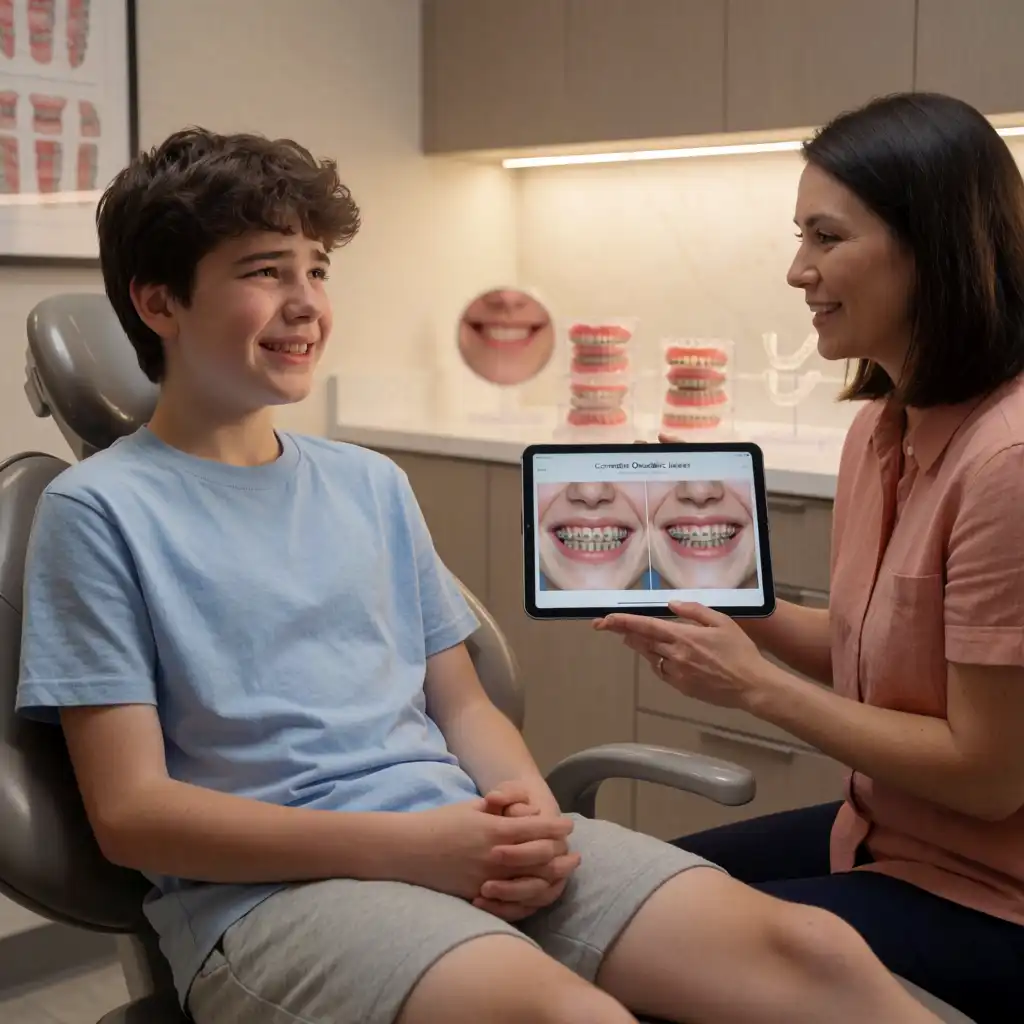
Braces remain one of the most highly effective and widely used solutions for correcting common orthodontic issues of all types and severities. By applying gentle, continuous pressure through brackets, wires, and bands, braces gradually guide teeth into their ideal positions over the course of treatment. They are particularly well-suited for addressing complex cases of crowding, overbite, underbite, crossbite, and spacing that may be beyond the range of clear aligner therapy alone. Modern braces are more comfortable and lower-profile than their predecessors, and customized treatment plans ensure that every patient receives a level of care tailored specifically to their dental anatomy and alignment goals. With proper compliance and regular adjustment appointments, braces consistently deliver optimal alignment and durable, long-term results that genuinely transform both the function and appearance of the smile.
Furthermore, Signs You Might Need Orthodontic Treatment helps individuals identify early indicators of misalignment, bite issues, and spacing problems that may require professional orthodontic evaluation and intervention.
Invisalign Solutions for Common Orthodontic Issues
Invisalign has emerged as a leading modern alternative to traditional braces for treating a wide range of orthodontic problems. Using a series of custom-fabricated, BPA-free clear plastic aligners, Invisalign gradually repositions the teeth through a carefully sequenced treatment plan. The aligners are virtually invisible when worn, removable for eating and oral hygiene, and generally more comfortable against soft tissues than metal brackets and wires. They are well-suited for addressing mild to moderate cases of crowding, spacing, overbite, and other common orthodontic issues, with newer Invisalign protocols also tackling more complex cases that previously required braces.
Additionally, exploring Types of Invisible Orthodontics helps patients compare discreet alignment options such as aligner systems and lingual solutions, allowing them to choose treatments that balance aesthetic preferences with clinical effectiveness and long-term stability of dental corrections.
Recovery After Treating Orthodontic Issues
Completing active orthodontic treatment is a major milestone, but the recovery and retention phase is equally important for ensuring that the results last. After braces or aligners are removed, the teeth are in their newly corrected positions but have not yet fully stabilized within the bone and surrounding tissues. Without proper retention, there is a significant risk of teeth gradually shifting back toward their original positions, a process known as orthodontic relapse.
Recovery and retention tips include:
- Follow our dentist’s or orthodontist’s post-treatment care instructions precisely and consistently
- Maintain excellent oral hygiene by brushing twice daily, flossing regularly, and using any prescribed antimicrobial rinses
- Wear your retainer exactly as prescribed, most patients require retainers full-time initially, transitioning to nighttime wear over time
- Attend all scheduled follow-up and retention appointments to allow the clinical team to monitor stability and make adjustments if needed
- Avoid habits that could exert abnormal pressure on the teeth, such as nail-biting, pen-chewing, or tongue thrusting
Proper recovery and diligent retainer use ensure that the investment made in orthodontic treatment translates into a lifetime of well-aligned, healthy teeth. The retention phase is not optional, it is the foundation upon which lasting orthodontic success is built.
North York Orthodontic Experts at Amirad Dental Clinic for Common Orthodontic Issues
Patients throughout North York and the greater Toronto area consistently trust Amirad Dental Clinic for expert orthodontic care that addresses the complete range of common orthodontic issues with precision and professionalism. Whether you are seeking traditional metal braces for a complex case, ceramic braces for a more aesthetic option, or Invisalign clear aligners for a discreet and comfortable treatment experience, the clinical team at Amirad has the expertise and technology to deliver outstanding, lasting results. Every patient who walks through the doors of Amirad Dental Clinic receives a thorough evaluation, an honest assessment of their orthodontic needs, and a tailored treatment plan designed to correct their specific issues efficiently and comfortably, because your smile deserves nothing less than the best care available.


