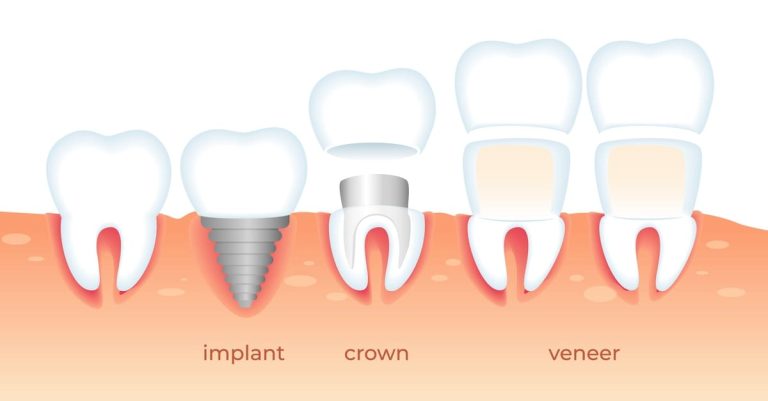
PFM Crown: A Strong Classic with a Natural Look
Imagine a tooth that has been weakened by a large filling, a crack, severe damage, or a root canal. A simple filling may no longer be enough to protect it. This is where a PFM crown can make a difference. PFM stands for Porcelain-Fused-to-Metal and, simply put, it combines a strong metal foundation with a tooth-colored porcelain outer layer. Think of it like a strong inner frame covered with a natural-looking finish. This combination has made PFM crowns a well-established option for restoring both strength and function.
In this guide, we will look at PFM crowns from a practical, patient-friendly perspective. You will learn when they may be recommended, what the treatment process feels like, how long they can last with proper care, and what their advantages and limitations are compared with newer crown materials. We will also explain why the best crown is not necessarily the newest one and how your tooth, bite, location of the tooth, and cosmetic expectations can influence the right choice. As a best dentist in North York, we focus on choosing the crown that best suits your tooth, bite, functional needs, and cosmetic goals—not simply the newest option.
What You’ll Learn in This Guide
- What a PFM crown is and how it works
- When a PFM crown may be recommended
- Its main benefits and limitations
- What to expect during the procedure
- How PFM compares with zirconia and all-ceramic crowns
- How to care for your crown after treatment
- How to decide if PFM is right for your tooth
At Amirad Dental Clinic, we choose the right dental crown in Toronto based on your tooth’s needs—not simply the material’s name. With PFM crowns, our focus is on combining dependable strength, a natural appearance, and a comfortable fit to support your smile for years to come.
| Feature | PFM Crown |
|---|---|
| Full Name | Porcelain-Fused-to-Metal Crown |
| Main Materials | Metal base + porcelain outer layer |
| Appearance | Tooth-colored and natural-looking |
| Strength | Good durability and chewing strength |
| Common Uses | Damaged, weakened, or root canal treated teeth |
| Suitable For | Front and back teeth, depending on the case |
| Main Advantage | Combines strength with a natural appearance |
| Possible Limitation | A dark metal line may become visible near the gum over time |
| Care | Regular brushing, flossing, and dental checkups |
| Treatment Choice | Depends on the tooth, bite, location, and cosmetic goals |
What Is a PFM Crown?
Have you ever wondered why some dental crowns look like natural teeth but still need to be strong enough for everyday chewing? A PFM crown is designed to do exactly that. PFM stands for Porcelain-Fused-to-Metal. Simply put, it has a strong metal base inside and a tooth-colored porcelain layer on the outside. This gives the crown a balance of strength and a natural-looking appearance, which is why PFM remains a useful option for many patients today.
For example, if a tooth has been badly damaged, has a large filling, or needs extra protection after root canal treatment, a dental crown can cover the tooth and help restore its normal shape and function. A PFM crown can be made to match the color of your surrounding teeth, while its inner structure provides support during everyday biting and chewing. Of course, PFM is not automatically the best choice for every tooth; your dentist should consider the tooth’s condition, location, bite, and your cosmetic expectations before recommending the material.
At Amirad Dental Clinic, we provide PFM crowns in Toronto, North York with a focus on more than just appearance. Our team carefully evaluates each tooth to determine whether a PFM restoration is the right choice for you. From planning and shade selection to fit and final placement, we take a personalized approach to create a dental crown that feels comfortable, functions naturally, and complements your smile.
Related Blog: CEREC Crowns
What Is a PFM Crown Made Of?
So, what is actually inside a PFM crown? The answer is pretty simple: it is made from two main materials that work together. The inside is a strong metal structure that gives the crown its support and stability. On top of that, a layer of dental porcelain is added to create a tooth-like color and appearance. This combination allows the crown to handle everyday biting and chewing while still looking much closer to a natural tooth than a completely metal crown.
You can think of a PFM crown like a strong jacket with a natural-looking outer finish. The metal underneath provides the strength, while the porcelain on the outside gives the crown its visible appearance. The porcelain can be shaped and matched to the surrounding teeth, although PFM crowns can sometimes show a thin darker line near the gum as the gum changes over time. The exact materials and design can vary depending on the crown and the patient’s needs.
Good Candidate for a PFM Crown
Could a PFM crown be the right choice for your tooth, or would another type of dental crown make more sense? If you have a tooth that is badly damaged, weakened, cracked, heavily filled, worn down, or has already had a root canal, a crown may be recommended to protect and restore it. PFM can be a suitable option when you want a combination of strength and a natural-looking appearance, but the final decision depends on the condition and location of your tooth, your bite, and your overall dental needs.
You May Be a Good Candidate If:
- Your tooth has significant damage or decay
- A large filling has left the tooth weak
- You have had root canal treatment
- The tooth is cracked, worn, or partially broken
- You need a strong restoration for a tooth used heavily for chewing
- You want a crown that combines metal strength with a porcelain appearance
- Your Toronto dentist determines that PFM fits your bite and cosmetic expectations
- There is enough healthy tooth structure to properly support the crown
Is PFM Right for You?
At Amirad Dental Clinic in Toronto, we do not recommend PFM crowns simply because they are a popular option. We first look at the condition of your tooth, how you bite, where the tooth is located, and what you want from your dental crown. A consultation allows our team to explain whether PFM is a good fit for you or whether another crown material could give you a better result.

What Are PFM Crowns Used For?
Wondering when a PFM crown actually makes sense? It is mainly used when a tooth needs more protection than a regular filling can provide. For example, a tooth that is badly damaged, cracked, heavily filled, worn down, or weakened after root canal treatment may need full coverage. PFM crowns can also be used on front and back teeth and as part of some dental bridges, giving the tooth both support and a tooth-colored appearance.
| Common Use | Simple Example |
|---|---|
| Weak or damaged tooth | A tooth has lost too much structure for a filling |
| Cracked or broken tooth | A damaged tooth needs full coverage and protection |
| After root canal | A weakened tooth needs additional protection |
| Large filling | An old filling has left the tooth with limited remaining structure |
| Worn-down tooth | Severe wear has changed the tooth’s shape |
| Front teeth | A tooth needs strength along with a tooth-colored appearance |
| Back teeth | A molar needs a restoration that can handle regular chewing |
| Dental bridges | PFM may be used as a supporting crown for a fixed bridge |
Can a PFM Crown Look Completely Natural?
Yes, a PFM crown can look very natural when the porcelain is carefully matched to the surrounding teeth. The shade, shape, size, and surface texture all play a role in making the crown blend in rather than stand out. When these details are planned well, most people will not notice that the tooth has a crown.
The main challenge is that PFM crowns contain a metal layer underneath the porcelain. In some cases, especially around the gum line, a slight darker edge may become visible over time. For a back tooth this may not matter much, but for a highly visible front tooth, a metal-free option may provide a more seamless appearance.


How Does a PFM Crown Work?
At Amirad Dental Clinic, the process starts with a careful look at the tooth and your bite. We determine whether a PFM crown is suitable, then prepare the tooth, take a digital scan or impression, and select a porcelain shade that blends with your smile. Once the custom crown is ready, we check its fit, shape, appearance, and bite before securing it in place. The goal is simple: a crown that feels comfortable, protects the tooth, and works naturally when you eat and smile.
PFM Crown Procedure at Amirad dentistry:
- Initial Assessment: We examine the tooth and discuss whether a PFM crown is the right choice.
- Tooth Preparation: The tooth is carefully reshaped to create enough space for the crown.
- Digital Scan or Impression: We capture the tooth and bite accurately for a well-fitting restoration.
- Shade Selection: The porcelain is matched as closely as possible to your natural teeth.
- Temporary Crown: A temporary crown may protect the prepared tooth while your permanent crown is being made.
- Custom Crown Fabrication: The PFM crown is created with a strong metal core and porcelain outer layer.
- Try-In & Bite Check: We check how the crown looks, fits, and meets the surrounding teeth.
- Final Placement: Once everything is satisfactory, the crown is securely cemented.
- Final Adjustments: Small adjustments can be made to improve comfort and make your bite feel natural.

How Many Appointments Does a PFM Crown Take?
In most cases, getting a PFM crown takes about two appointments, although the exact number can vary depending on your tooth and the dental laboratory process. During the first visit, the tooth is examined and prepared, a digital scan or impression is taken, and a temporary crown may be placed. At the second visit, the finished PFM crown is checked for its fit, color, shape, and bite before being permanently placed. If the tooth needs additional treatment first, you may need extra appointments.
What Can Affect the Number of Visits?
- Root canal needed: The tooth may need treatment before the crown.
- Extensive tooth damage: More preparation or rebuilding may be required.
- Gum condition: Healthy gums can help provide a better crown fit.
- Temporary crown: You may wear one while the permanent PFM crown is being made.
- Bite adjustments: Additional adjustment may be needed if your bite feels uneven.
- Complex cases: Multiple damaged teeth can require a longer treatment plan.
- Crown remake or adjustment: Occasionally, changes are needed to achieve the desired fit and appearance.
Whether you need a PFM crown or a porcelain crown, the goal is the same: a precise fit and a comfortable, natural-looking result.
|
|
|---|---|
|
|
|
|
|
|
Read More: Dental Veneers vs. Crowns
What Are the Benefits of PFM Crowns?
What makes a PFM crown different from simply choosing a strong crown or a good-looking crown? Its main advantage is that it tries to bring both together. The metal structure underneath provides reliable support, while the porcelain on the outside gives the tooth a more natural appearance. It is a bit like having a strong foundation hidden beneath a finish designed to look like a real tooth. This balance can make PFM a practical choice when strength matters but appearance still matters too. It is especially useful when a damaged tooth needs full coverage rather than just a cosmetic improvement.
Key Benefits of PFM Crowns:
- Strong inner support: The metal core helps the crown handle everyday biting and chewing.
- Natural-looking surface: Porcelain gives the restoration a tooth-colored appearance.
- Good balance of strength and appearance: It sits between purely metal restorations and highly cosmetic options.
- Versatile use: PFM crowns can be considered for both front and back teeth, depending on the case.
- Reliable restoration: They have been used successfully for many years in restorative dentistry.
- Custom fit: The crown is made to follow the shape, size, and bite of the individual tooth.
- Helps protect weakened teeth: Full coverage can help support a tooth that has lost significant structure.
- Can restore everyday function: A properly fitted crown can make biting and chewing feel much more normal again.
- Porcelain can be shade-matched: The visible surface can be designed to blend with the surrounding teeth.

Disadvantages of PFM Crowns
PFM crowns have been used successfully for many years, but like any dental crown, they are not perfect for every situation. One consideration is that the porcelain outer layer can sometimes chip or wear over time, especially when the crown is exposed to heavy biting forces. Another is that a thin dark line from the metal underneath may become visible near the gum, particularly if the gum naturally changes position over the years. PFM also requires some tooth preparation to create enough space for its structure.
For example, if you are looking for the most natural appearance possible for a highly visible front tooth, your orthodontic or restorative specialist may discuss newer all-ceramic options with you. On the other hand, for a heavily damaged back tooth where strength is a major priority, PFM may still be a very reasonable choice. At Amirad Dental Clinic, we recommend a crown based on the individual tooth, your bite, and your expectations. A consultation can help you understand whether PFM or another crown material makes more sense for your particular case.
Are PFM Crowns Good for Front & Back Teeth?
Yes, PFM crowns can be used for both front and back teeth, but the reason for choosing them can be different. For a back tooth, strength and the ability to handle daily chewing are usually especially important. For a front tooth, appearance, shade, and how naturally the crown blends with neighboring teeth become more noticeable. For example, a heavily damaged molar may benefit from the strong metal foundation of a PFM crown, while a visible front tooth may require a closer look at your cosmetic expectations before choosing PFM.
The important point is that one crown material does not automatically fit every tooth. At Amirad Dental Clinic, the condition of the tooth, amount of remaining tooth structure, bite, location, and desired appearance are considered before recommending a PFM crown or another option.
PFM Crowns: Front vs. Back Teeth
| Factor | Front Teeth | Back Teeth |
|---|---|---|
| Main Priority | Natural appearance and shade | Strength and chewing function |
| Visibility | Very high | Usually less noticeable |
| Chewing Pressure | Generally lower | Often much higher |
| PFM Advantage | Porcelain surface can provide a tooth-colored look | Strong metal foundation can provide good support |
| Main Concern | Metal line may become visible near the gum | Porcelain may chip under heavy forces |
| Best For | Damaged front teeth when PFM suits cosmetic needs | Weak or heavily restored molars and premolars |
| Other Options | All-ceramic or zirconia may be considered | Zirconia or other strong crown materials may be considered |
| Final Choice | Depends on appearance, bite, and tooth condition | Depends on chewing forces, tooth condition, and bite |
How Is a PFM Crown Placed?
Think of it as giving your tooth a strong new cover that is made just for it. First, I carefully prepare the tooth so the crown has enough space to sit properly. Then, we take a digital scan or impression and choose a shade that blends with your natural teeth. While your permanent crown is being prepared, you may receive a temporary crown to protect the tooth.
When your PFM crown is ready, I place it on the tooth first to check the fit, shape, color, and the way your teeth come together when you bite. If everything looks and feels right, the crown is securely cemented in place. I also make any small adjustments needed so you can bite, chew, and smile comfortably.

How Long Do PFM Crowns Last?
How many years can you really expect a PFM crown to last? With good oral hygiene, regular dental checkups, and a healthy bite, a well-made PFM crown can often last around 10 to 15 years or longer. But the material itself is only part of the story. Your chewing habits, grinding or clenching, gum health, the condition of the tooth underneath, and how well the crown fits can all affect its lifespan. In other words, a crown does not suddenly “expire” after a certain number of years. If it remains healthy, comfortable, and properly fitted, it may continue to serve you well.
Compared with other crown options, PFM has a long track record and offers a practical combination of strength and appearance. However, newer materials such as zirconia and all-ceramic crowns can offer different advantages, particularly when appearance or specific functional needs are important. The right comparison is therefore not simply “Which crown lasts the longest?”, but “Which crown is most suitable for this particular tooth?”
| Crown Type | Typical Lifespan* | Main Strength |
|---|---|---|
| PFM Crown | 10–15+ years | Balance of strength and appearance |
| Zirconia Crown | 10–15+ years | High strength and durability |
| All-Ceramic Crown | 10–15+ years | Natural appearance |
| Metal Crown | 15+ years | Excellent durability |
| Gold Crown | 15+ years | Long-term durability and wear resistance |
*These are general estimates, not guarantees. Proper care, bite forces, oral hygiene, and the condition of the supporting tooth can significantly affect how long any crown lasts.
Read More: How Long Do Dental Fillings Last?
How Much Does a PFM Crown Cost?
So, how much should you expect to pay for a PFM crown? There is no single price that applies to every patient. The cost can change depending on the condition of the tooth, how much preparation it needs, the type of metal used, laboratory work, and whether additional treatment such as a root canal or buildup is needed. PFM crowns combine a metal foundation with a porcelain exterior, which gives them a practical balance between strength and appearance.
When you compare PFM with other dental crown options, the price difference is usually connected to the material, laboratory process, technology, and cosmetic characteristics. PFM is often considered a mid-range option, while some newer ceramic or zirconia restorations may cost more depending on the case and provider. That does not mean the most expensive crown is automatically the best one. At Amirad Dental Clinic, we recommend discussing your tooth, bite, cosmetic expectations, and budget with our team so we can help you choose a crown that makes sense for your particular situation.
Explore: Crown After Root Canal
PFM Crown Cost Compared With Other Options
| Crown Type | Relative Cost | Main Reason |
|---|---|---|
| PFM Crown | $$ Moderate | Established material with metal + porcelain |
| Full Metal Crown | $$ Moderate | Durable but less aesthetic |
| All-Ceramic Crown | $$$ Higher | Strong focus on natural appearance |
| Zirconia Crown | $$$ Higher | High strength and modern ceramic material |
| Gold Crown | $$$–$$$$ Higher | Premium metal and material cost |
Important: These are general cost categories, not fixed prices. The actual fee can vary significantly depending on the tooth, treatment required, material selected, laboratory, and individual treatment plan.
How to Care for Your PFM Crown
Got your PFM crown placed? Taking care of it is actually quite simple. You do not need a complicated routine, but the tooth underneath the crown and the surrounding gums still need regular attention. Good daily care can help keep the crown comfortable, clean, and functional for many years.
Important Care Tips After a PFM Crown:
- Brush twice a day with a soft-bristled toothbrush.
- Floss every day, especially around the crown and gum line.
- Avoid biting very hard objects such as ice, pens, or hard candy.
- If you grind or clench your teeth, ask about a night guard.
- Keep regular dental checkups so the crown and the tooth underneath can be monitored.
- Pay attention to pain, sensitivity, looseness, or a change in your bite.
- If the crown feels too high or uncomfortable when chewing, let your dental team know.
- Continue caring for the crowned tooth just like your natural teeth—a crown does not make the tooth underneath immune to problems.

What Happens If a PFM Crown Fails or Needs to Be Replaced?
A PFM crown may eventually need repair or replacement if it becomes loose, cracks, chips, wears down, or if the tooth underneath develops tooth decay or another problem. Replacement does not always mean something went wrong with the original treatment; crowns have a lifespan, and changes in the tooth, gums, or bite can make a new restoration necessary. The dentist will first check the crown and the tooth underneath to decide whether it can be repaired or should be replaced.
- Crown becomes loose or falls out
- Porcelain chips or cracks
- Decay develops underneath the crown
- Tooth becomes painful or sensitive
- Gum recession exposes the crown margin
- Bite changes or the crown feels too high
- The crown becomes worn after years of use
- A new crown material may be recommended based on the tooth’s current condition
Read More: All About Sensitive Teeth
PFM Crown vs. Zirconia Crown: Which Is Better?
PFM or zirconia—which one should you choose? The answer is not as simple as saying one is always better. PFM crowns have a strong metal foundation covered with porcelain, making them a well-established choice when durability and appearance both matter. Zirconia crowns, on the other hand, are completely metal-free and are known for their strength and modern appearance. For a back tooth that takes a lot of pressure, strength may be the biggest concern; for a highly visible front tooth, having no metal underneath may be more appealing. Your tooth’s condition, bite, location, and the look you want should all be considered before making the decision.
| Feature | PFM Crown | Zirconia Crown |
|---|---|---|
| Material | Metal + porcelain | Zirconia ceramic |
| Strength | Strong | Very strong |
| Appearance | Natural-looking | More natural-looking |
| Metal-Free | ❌ No | ✅ Yes |
| Front Teeth | Good option in suitable cases | Excellent when aesthetics matter |
| Back Teeth | Strong choice | Excellent for heavy chewing |
| Gum Line | Metal may become visible over time | No metal line |
| Durability | Very good | Excellent |
| Cost | Often more affordable | Often more expensive |
| Best For | Patients wanting a balance of strength and appearance | Patients wanting strength with a metal-free restoration |
PFM Crown vs. All-Ceramic Crown
If you are choosing between a PFM crown and an all-ceramic crown, the biggest difference is what sits underneath the visible surface. PFM has a strong metal core covered with porcelain, while an all-ceramic crown is made entirely from ceramic materials, with no metal inside. This gives all-ceramic crowns an advantage when a very natural appearance is the priority, especially for visible front teeth. PFM, meanwhile, offers a long-established combination of strength and appearance and can be a practical choice for many damaged teeth. The better option depends on where the crown is needed, how much pressure the tooth receives, and what kind of appearance you want.
| Feature | PFM Crown | All-Ceramic Crown |
|---|---|---|
| Inside | Metal + porcelain | Ceramic |
| Appearance | Natural | Highly natural |
| Metal-Free | No | Yes |
| Front Teeth | Good in suitable cases | Often excellent for aesthetics |
| Back Teeth | Strong and practical | Depends on the ceramic type |
| Gum Line | Metal may become visible over time | No metal line |
| Main Advantage | Strength + proven performance | Natural appearance + metal-free design |
| Ideal Priority | Durability with good aesthetics | Maximum aesthetic appeal |
What Can Damage a PFM Crown?
A PFM crown is made to be durable, but how you treat it matters. Biting ice, hard objects, or using your teeth to open packages can put unnecessary pressure on the porcelain and may cause it to chip. Teeth grinding or clenching can also place extra stress on the crown. Keeping the crown clean is just as important because the natural tooth underneath can still develop decay if oral hygiene is neglected.
Small Habits That Can Make a Difference
- Avoid chewing ice or very hard foods.
- Do not use your teeth to open packages or bottles.
- Brush twice daily and floss around the crown.
- If you grind your teeth, ask about a custom night guard.
- Do not ignore a crown that suddenly feels loose or uncomfortable.
- Have the crown checked during your regular dental visits.
- If you notice chipping, sensitivity, pain, or a change in your bite, contact your dental team rather than waiting for it to get worse.

Can PFM Crowns Still Be a Good Choice in 2026?
Absolutely—but “newer” does not automatically mean “better.” In 2026, PFM crowns are still a relevant option when a tooth needs a dependable restoration that combines a strong inner structure with a porcelain outer surface. Modern zirconia and other ceramic materials have become excellent choices too, especially when a metal-free restoration or highly natural appearance is the priority. The important question is not whether PFM is old or new, but whether it makes sense for that particular tooth.
At Amirad Dental Clinic, we look at the actual condition of the tooth, its position, bite, remaining tooth structure, and your expectations before choosing the crown material. For example, a patient with a heavily damaged back tooth may have very different priorities from someone replacing a highly visible front tooth. In 2026, good crown treatment is less about following a trend and more about choosing the material that fits the patient’s situation.
Final Thoughts on PFM Crowns
Choosing a PFM crown should not be based on price or appearance alone. The condition of the tooth, its location, bite pressure, remaining structure, and your expectations all matter. A well planned crown can restore strength, function, and appearance while protecting a weakened tooth for years. Even if a crown eventually needs replacement, a careful evaluation can help determine the right solution for the next stage.
At Amirad Dental Clinic, we believe a good Dental Crown should feel like a natural part of your smile, not simply cover a damaged tooth. We take the time to understand each case, explain the available options clearly, and recommend the restoration that makes the most sense for your tooth. Our goal is simple: a comfortable fit, reliable function, and a result you can feel confident about.